Do you know the number one reason why most skincare routines and skincare steps fail?
It is not because the products are bad.
It is not because skincare is too complicated.
And it is definitely not because your skin is “impossible” to fix.
The real reason most skincare routines fail is much simpler than people think. Most people don’t actually know their skin type.
When you don’t know your skin type, it becomes almost impossible to build a routine that actually works.
Many people follow trending skincare advice, viral routines, or influencer recommendations without realizing that those routines were designed for a completely different skin type. As a result, they end up using products that do not match their skin’s natural needs.
In this guide, you will learn exactly how to know your skin type, what characteristics define each skin type, and the simple methods you can use at home for knowing the skin type accurately.
By the end of this article, you will have a clear understanding of your skin and the confidence to create a skincare routine that actually works for you.
What Exactly is Meant by Skin Type?
Skin type refers to the natural characteristics of your skin that determine how it behaves under normal conditions.
These characteristics are influenced primarily by the amount of oil your skin produces, how well it retains moisture, and how sensitive it is to environmental factors or skincare products.
The skin contains sebaceous glands that produce sebum, which is the natural oil responsible for protecting and moisturizing the skin. The amount of sebum produced varies from person to person, and this variation largely determines whether someone has oily, dry, or balanced skin.
However, skin type is not determined by oil production alone. Hydration levels, pore size, skin texture, and the skin’s tendency to react to products or environmental changes also play an important role.
Why Identifying Your Skin Type is Important?
Understanding your skin type is essential because it forms the foundation of an effective skincare routine. When skincare products are chosen without considering skin type, they can disrupt the skin’s natural balance and create new problems rather than solving existing ones.
For example, someone with oily skin might unknowingly use heavy creams meant for dry skin, which can clog pores and cause breakouts.
A person with dry skin might start using harsh oil-controlling cleansers that strip away essential moisture. Someone with sensitive skin might follow aggressive exfoliation routines that lead to irritation and redness.
In all of these situations, the problem is not necessarily the products themselves. The real issue is not knowing the skin type and not tailoring the routine accordingly.
This is why learning to know your skin type is one of the most important steps in skincare. When you know your skin type, it becomes much easier to understand what your skin actually needs.
Once individuals understand how their skin behaves, they can make informed decisions about which ingredients and formulations will benefit their skin.
The Different Types of Skin
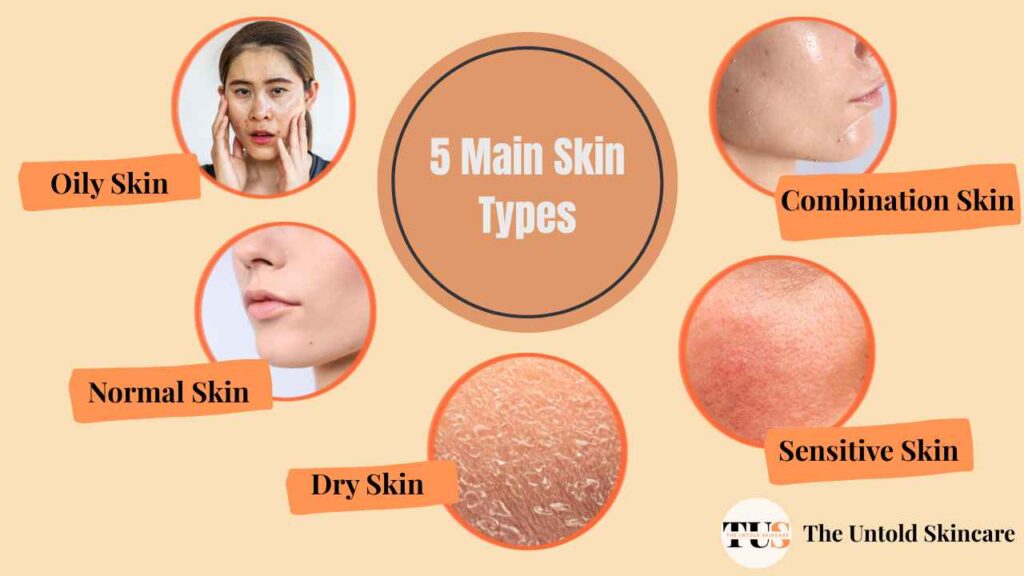
Dermatologists generally categorize skin into five primary types. Each skin type has its own characteristics, behaviors, and needs.
Normal Skin

Normal skin is often considered the most balanced and stable skin type.
People with normal skin typically have a healthy equilibrium between oil production and moisture retention. The skin produces enough natural oil to stay hydrated and protected, but not so much that it appears greasy or shiny.
The texture of normal skin is usually smooth and soft, and the pores tend to be small or barely visible. Breakouts are relatively uncommon, and the skin generally maintains an even tone and comfortable feel throughout the day.
Because the skin barrier is functioning well, normal skin is less likely to react strongly to environmental changes or new skincare products.
Although normal skin is often described as the “ideal” skin type, it still requires proper care to maintain its balance. Exposure to pollution, sun damage, harsh skincare products, or aging can gradually disrupt this equilibrium.
Maintaining a gentle skincare routine that includes cleansing, moisturizing, and sun protection helps preserve the natural health of normal skin.
Oily Skin
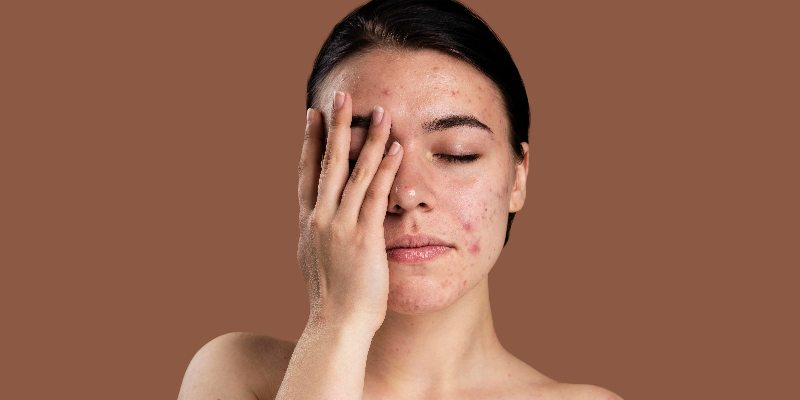
Oily skin is characterized by increased sebum production from the sebaceous glands.
Sebum is the natural oil produced by the skin to maintain hydration and protect the skin barrier. However, when the sebaceous glands are overly active, the skin can appear shiny or greasy, especially in areas like the forehead, nose, and chin.
People with oily skin often notice that their face becomes shiny within a few hours after washing. The pores may appear larger or more noticeable because excess oil can stretch the pore openings.
This type of skin is also more prone to blackheads, whiteheads, and acne breakouts because oil can combine with dead skin cells and clog the pores.
Despite these challenges, oily skin has certain advantages. The natural oil helps protect the skin barrier and often slows down the appearance of fine lines and wrinkles compared to drier skin types.
Many dermatologists note that people with oily skin may experience visible signs of aging later than those with dry skin.
Managing oily skin usually involves maintaining balance rather than trying to eliminate oil completely. When oil is stripped too aggressively with harsh cleansers or over-exfoliation, the skin may respond by producing even more oil to compensate.
Using lightweight, non-comedogenic products can help control excess oil while keeping the skin barrier healthy.
Related Post: Everything About Oily Skin: Pros, Cons, Remedies and More
Dry Skin
Dry skin occurs when the skin produces insufficient natural oil, which leads to a lack of moisture and protective lipids on the skin’s surface.
As a result, the skin may feel tight, rough, or uncomfortable, particularly after cleansing or exposure to cold weather.
People with dry skin often notice flaking, dullness, or uneven texture. The skin may appear less plump and may develop fine lines more easily because the lack of moisture reduces the skin’s elasticity. In some cases, severe dryness can lead to itching, irritation, or small cracks in the skin barrier.
Environmental factors can significantly worsen dry skin. Cold climates, low humidity, excessive washing, and harsh skincare products can strip away the limited oils that the skin naturally produces. As the skin barrier weakens, moisture escapes more easily, making the dryness more noticeable.
Caring for dry skin typically involves restoring and maintaining hydration. Moisturizers that support the skin barrier help lock in moisture and protect the skin from further water loss. Gentle cleansing and avoiding overly harsh ingredients are also important in maintaining comfort and improving the appearance of dry skin.
Combination Skin
Combination skin is one of the most common skin types and is characterized by having different skin conditions in different areas of the face.
Typically, the T-zone, which includes the forehead, nose, and chin, tends to produce more oil, while the cheeks and outer areas of the face may remain normal or slightly dry.
This variation occurs because the density of sebaceous glands differs across the face. The T-zone generally contains more oil-producing glands, which explains why this area often appears shinier and may develop enlarged pores or occasional breakouts.
People with combination skin may find that certain areas of the face require oil control while others require hydration. This can make skincare slightly more complex because a single product may not address the needs of the entire face equally.
Managing combination skin often involves maintaining balance between hydration and oil control. Gentle cleansers, lightweight moisturizers, and targeted treatments can help address the specific needs of different facial areas without disrupting the overall skin barrier.
Sensitive Skin
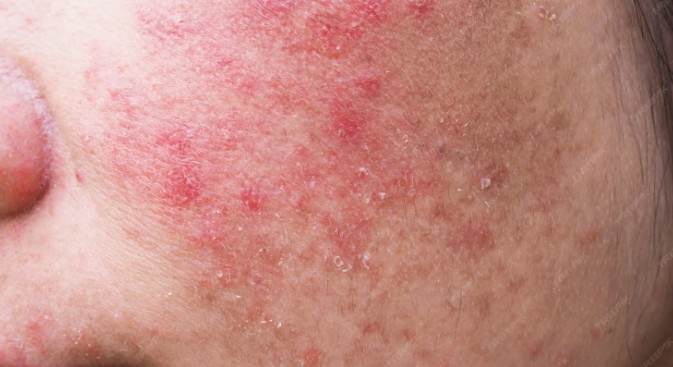
Sensitive skin refers to skin that reacts more easily to environmental triggers, skincare products, or certain ingredients.
Although sensitive skin can occur alongside oily, dry, or combination skin types, it is often discussed as a separate category because of its unique challenges.
People with sensitive skin frequently experience redness, irritation, itching, or burning sensations when exposed to certain products or conditions. Common triggers may include fragrances, alcohol-based formulations, strong exfoliating acids, extreme temperatures, or pollution.
The underlying cause of sensitive skin is often a weakened or compromised skin barrier. When the barrier is not functioning properly, irritants can penetrate the skin more easily, leading to inflammation and discomfort.
Sensitive skin usually requires a simplified skincare routine that focuses on calming and protecting the skin barrier. Gentle formulations, soothing ingredients, and minimal product experimentation can help reduce irritation and maintain skin comfort.
Also Read: How to Get Clear Skin? 20 Tips That Include Everything
Simple Methods to Identify Skin Type
Determining your skin type does not necessarily require professional equipment or dermatological testing. There are several simple methods that can provide valuable insights into how your skin behaves.
The Bare Face Observation Method
One of the simplest ways to identify your skin type is to observe your skin in its natural state. This method involves washing your face with a gentle cleanser and allowing your skin to remain completely free of products for about thirty to sixty minutes.
Step-by-Step Process
- Wash your face with a gentle cleanser.
- Pat your skin dry.
- Do not apply any skincare products.
- Wait for about 1-2 hours.
- Now observe how your skin feels.
Results
Shiny all over: Oily skin
Tight or flaky: Dry skin
Shiny in T-zone only: Combination skin
Comfortable and balanced: Normal skin
The Blotting Paper Test
Another helpful approach involves using blotting paper to measure oil production throughout the face. By gently pressing blotting paper onto different areas of the skin, you can observe how much oil is transferred onto the paper.
How to Do It
- Press blotting paper on different areas of your face.
- Hold the sheet against the light.
Results
Lots of oil on the sheet: Oily skin
Minimal oil: Normal skin
Oil only from T-zone: Combination skin
Little to no oil: Dry skin
The Pore Observation Method
Pore size can also provide clues about skin type. Larger pores are often associated with oily skin because excess sebum expands the pore openings.
What to Look For
Large pores: Oily skin
Small pores: Dry skin
Medium pores: Normal skin
Large pores only around nose: Combination skin
Signs That You May Have Sensitive Skin
Sensitive skin is not always a separate skin type, it can exist alongside oily, dry, or combination skin.
Common Indicators
- Burning sensation after skincare
- Frequent redness
- Skin reacts to fragrance
- Irritation from new products
- Stinging when applying actives
Factors That Influence Your Skin Type
Although genetics plays a major role in determining skin type, several external and internal factors can influence how the skin behaves over time.
Hormonal changes are among the most significant influences. During adolescence, increased hormone activity often stimulates oil production, leading to oily skin and acne. As people age, hormonal changes may gradually reduce oil production, causing the skin to become drier.
Environmental conditions also have a noticeable impact. Humid climates tend to increase oil production, while cold and dry environments can reduce moisture levels in the skin.
Lifestyle habits, including diet, sleep patterns, stress levels, and skincare practices, can also affect how the skin behaves. Overuse of harsh skincare products, for example, can damage the skin barrier and temporarily create symptoms similar to sensitive or dry skin.
Can Your Skin Type Change Over Time?
Skin type is not always permanent. Many people notice changes in their skin as they age or experience different life stages. Teenage skin that once produced excessive oil may gradually shift toward combination or normal skin during adulthood.
Similarly, skin that was once balanced may become drier over time as natural oil production decreases with age. Seasonal changes can also temporarily alter the skin’s behavior, causing increased dryness during winter or increased oiliness during warmer months.
Because of these variations, it is beneficial to occasionally reassess your skin type and adjust your skincare routine accordingly.
Some References Used:
How To Identify Your Skin Type, According To a Dermatologist
Identifying your skin type: A guide by Dr Jonathan Kentley
Frequently Asked Questions
1. Can I have more than one skin type on my face?
Yes, it is very common to have different skin behaviors in different areas of the face. Many people experience oiliness in the forehead, nose, and chin while the cheeks remain normal or dry. This condition is known as combination skin and usually requires a balanced skincare routine that addresses the needs of different areas.
2. Does pore size determine your skin type?
Pore size can give clues about your skin type but it does not define it completely. People with oily skin often have more visible or enlarged pores because excess oil stretches the pores. Dry skin usually has smaller pores, while normal skin tends to have moderately sized pores.
3. Does diet affect your skin type?
Diet does not directly change your skin type, but it can influence how your skin behaves. Diets high in sugar, dairy, or highly processed foods may increase oil production or trigger breakouts in some individuals, while a balanced diet rich in nutrients supports overall skin health.
4. Can using the wrong skincare products change my skin type?
Using unsuitable skincare products may not permanently change your skin type, but it can temporarily affect how your skin behaves. For example, overly harsh cleansers can make skin feel dry and irritated, while very heavy creams may make the skin feel oilier than usual.
5. Is oily skin always acne-prone?
Oily skin is more prone to clogged pores and acne, but not everyone with oily skin develops breakouts. Acne usually occurs when excess oil combines with dead skin cells and bacteria. With the right skincare routine, oily skin can remain clear and healthy.
6. At what age should someone start identifying their skin type?
Understanding your skin type can be helpful as soon as you begin a regular skincare routine, which often starts during the teenage years. Knowing your skin type early allows you to choose appropriate products and develop healthier skincare habits over time.